From the Estate Garden
The Head Gardener’s Notes:
Keeping a Bay Tree
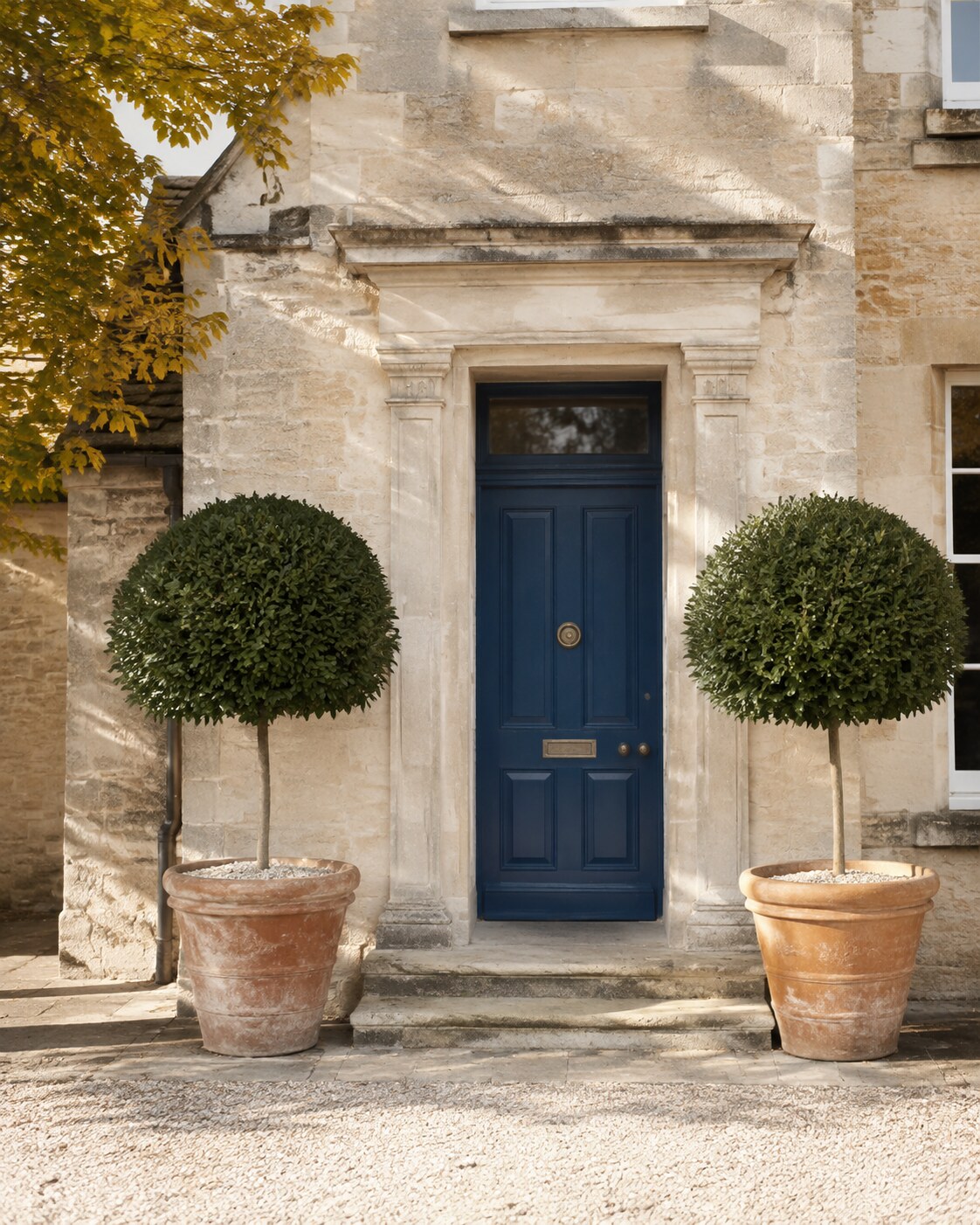
With its glossy evergreen leaves and naturally architectural form, bay has long earned its place beside entrance doors, along terraces and within sheltered courtyard gardens. The Head Gardener shares a few practical notes for keeping a potted bay healthy, well-shaped and worthy of its position.
Read the notesPosition & planting
Begin with the
right position
A bay tree appreciates light, shelter and good drainage. Choose a sunny or partly shaded position, protected where possible from strong winds and the harshest winter weather.
A sheltered entrance, walled terrace or courtyard can suit it particularly well. Avoid low, persistently damp positions and make sure the container is able to drain freely.
Give the roots room—but not too much
For a bay grown in a container, use a sturdy pot with drainage holes and a free-draining, loam-based compost. A little added grit can help prevent the roots from sitting in wet compost.
Repotting is usually needed every couple of years in spring. Move into a container only slightly larger than the existing one; an unnecessarily large pot can retain more moisture than the roots require.
Water & nourishment
Water by observation,
not routine
Potted bay trees need regular attention during warm, dry weather, but they do not enjoy being waterlogged.
Check the compost before watering. Water thoroughly when it begins to feel dry, allow the excess to drain, and never leave the pot standing permanently in water. Reduce watering considerably during winter, while making sure the root ball does not become completely dry.
Feed through the growing season
From mid-spring until late summer, apply a balanced liquid feed approximately every two weeks, or use a suitable controlled-release fertiliser at the beginning of the growing season.
Stop regular feeding as growth slows towards autumn. The aim is steady, healthy foliage rather than a late flush of soft growth before winter.
Shape & proportion
Clip carefully
Established bay can be lightly shaped during summer. Use clean, sharp secateurs and cut individual stems rather than running shears indiscriminately across the plant. This avoids leaving a fringe of partially cut leaves, which can turn brown at the edges.
Remove dead, damaged or poorly positioned growth as required, but avoid heavy autumn pruning when the plant is approaching winter.
A bay tree asks for observation more than constant attention: shelter at the right moment, water when required and a light hand with the secateurs.
— The Head Gardener
As the weather turns
Prepare for
colder weather
Container-grown bay is more vulnerable to cold because its roots do not have the insulation provided by open ground.
Before prolonged frost:
Move the tree to a sheltered position beside a wall, beneath a porch or into an unheated greenhouse.
Raise the container onto pot feet so rainwater can drain away.
Wrap the pot with an insulating material during severe cold.
Protect the foliage with horticultural fleece when necessary.
Keep the tree away from icy winds and areas affected by salt or de-icing products.
A useful diagnosis
Read the leaves
A bay tree often shows discomfort through its foliage.
Yellow leaves
can indicate waterlogged roots, poor drainage or a lack of nutrients.
Brown leaf edges
may follow drought, cold winds or frost damage.
Curled or thickened leaf margins
can be caused by bay sucker.
Black surface deposits
may be sooty mould growing on the sticky residue left by sap-feeding insects.
Begin by checking the position, compost moisture and drainage rather than immediately adding more water or feed. Remove badly damaged leaves and inspect the remaining foliage carefully.
 Berry & Grouse · The South Terrace
When the position asks too much of a living bay
Not every doorway, terrace or courtyard offers the shelter, drainage or regular attention a living bay requires. An exposed entrance may be troubled by wind and frost, while a shaded corner, second home or infrequently used doorway can make consistent care difficult.
For these positions, an artificial bay can provide the same sense of height, greenery and quiet formality without watering, feeding, repotting or clipping.
The South Terrace
Artificial Bay Tree
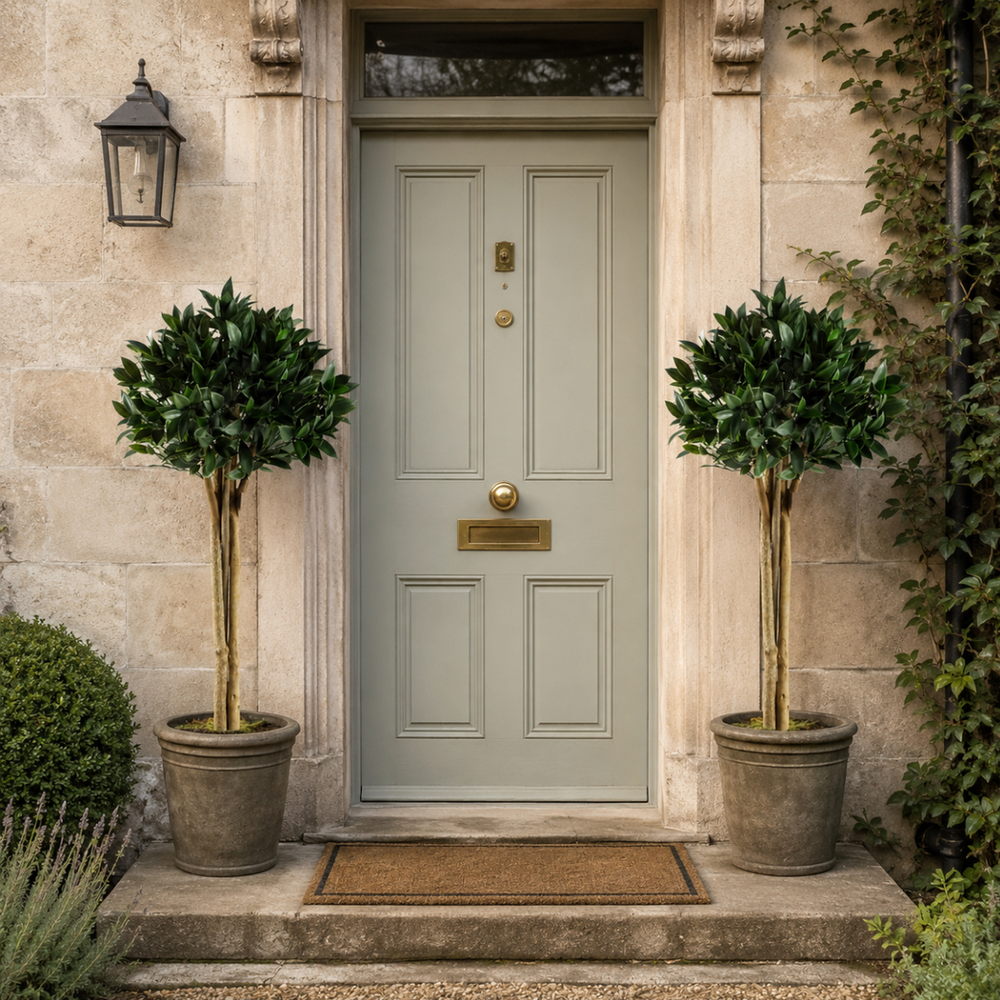
Standing approximately 120cm tall, the Berry & Grouse artificial bay tree combines UV-resistant foliage with a natural wood trunk and gently shapeable branches. Use one to furnish a sheltered terrace corner or place a pair in matching planters to frame French doors, an orangery or a traditional entrance.
Each tree is supplied in a weighted nursery pot, ready to position inside a suitable decorative outer planter. For outdoor use, choose a stable, freely draining planter and move the tree to a protected position during storms or prolonged severe weather.
Explore the artificial bay tree